
The Meximalism Manifesto
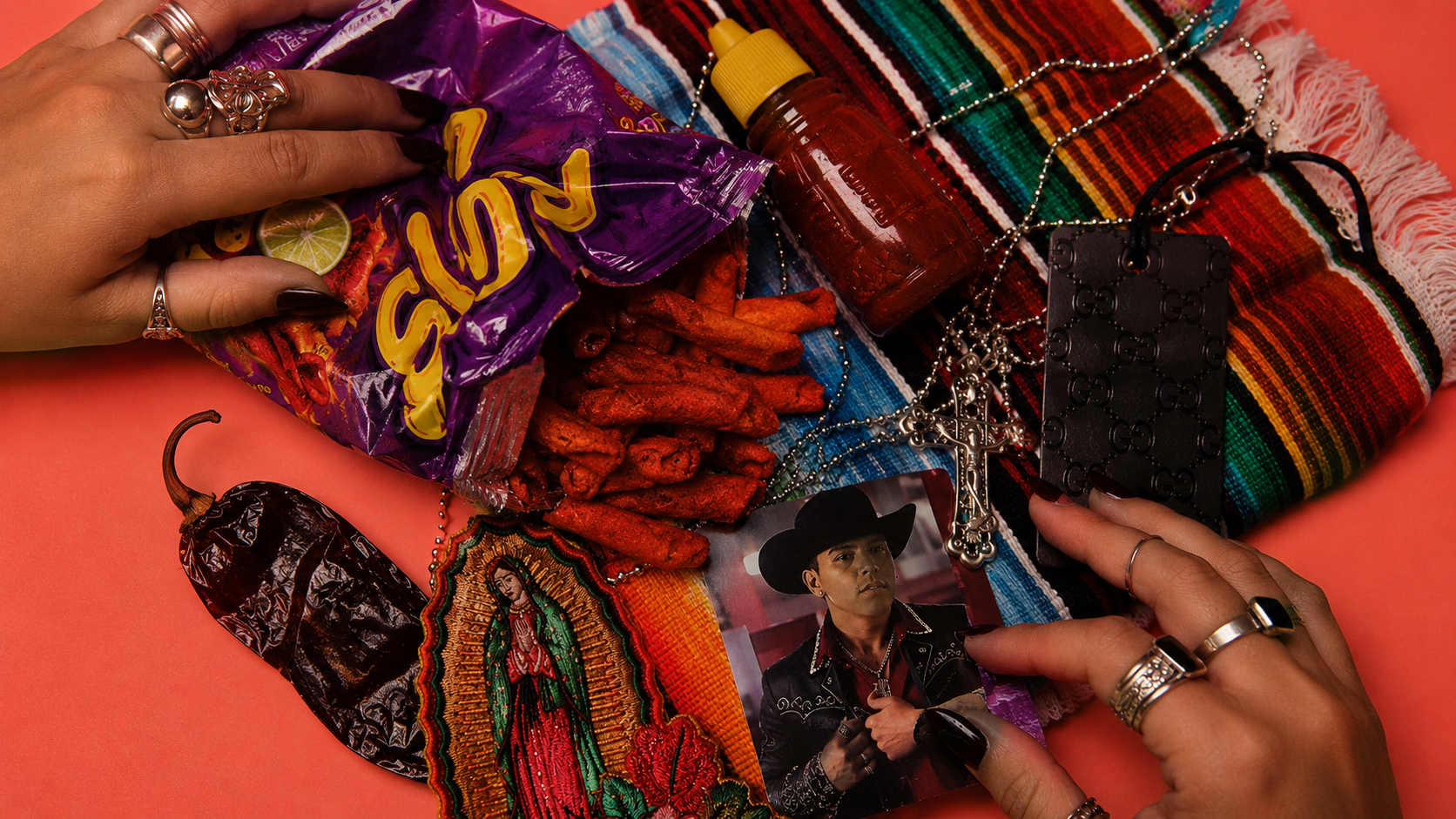
Why global minimalism fails the Mexican consumer: the cultural grammar that replaces it.
In Mexico, the void is not respected: it gets filled. More of what's good is a consumption maxim that applies from packaging to the intensity of the brand experience.
For the past decade, international design and marketing have been obsessed with Scandinavian minimalism and American effortless chic: clean spaces, neutral color palettes, hyper-synthesized copy, and the premise that "less is more."
Cross the border into Mexico and that aseptic aesthetic collides head-on with a wall of reality. Less is not more here. Here, Meximalism reigns: a deep aesthetic and anthropological category, a contemporary baroque, a natural evolution of Mexico's cultural syncretism where chaos is coldly calculated, abundance is synonymous with generosity, and the void is perceived as lack. In its purest expression, it is the philosophy of "everything, everywhere, all at once."
At Syncretic, we have spent years mapping this logic across seemingly unrelated categories: gastronomy, urban fashion, music, and digital culture.
01 · Gastro Layering: From Colonial Mole to Dorilocos
In Anglo-Saxon culture, flavors are typically isolated to be appreciated in their purity. In Mexico, flavor is an exercise in deliberate architecture and accumulation.
Our most celebrated culinary expression, mole, is a layering of more than 30 ingredients, chiles, chocolate, seeds, and spices coexisting in a dense, irreducible harmony. It's not a cultural accident: it's a cognitive model. A way of understanding that complexity is not noise, but richness.
That same baroque principle is replicated today in street food and mass snacking. Dorilocos and Papitas Preparadas, where the snack bag becomes a container for pork rinds, peanuts, jicama, clamato, hot sauce, and lime, defy any logic of lightness. In beverages, the Michelada migrated from the salted-rim glass to installation art: crowned with candy skewers, shrimp, watermelon slices, chamoy in a spiral. The original product is just the starting point.
Implication · In Mexico, the best product is the one the consumer can intervene in: add to, mix, transform, make their own. Mole, dorilocos, michelada are platforms for participation, not closed experiences. A brand that doesn't open that space has no place in the consumer's ritual.
02 · Urban Fashion: The New Tianguis of High Fashion
Contemporary Mexican fashion no longer draws inspiration from the tourist postcard of embroidered regional dresses. It draws from the friction of the street. Emerging designers and brands are generating a visual Meximalism that blends popular culture iconography with global streetwear silhouettes.
Sánchez-Kane challenges notions of gender and Mexicanness by mixing high-fashion tailoring with rodeo elements, religious motifs, and the aesthetic of Mexican hardware stores. PAY'S uses chromatic excess, graphics alluding to the esotericism of popular markets and the sarape, condensed into urban pieces with high youth demand. Tony Delfino and Sad Boy integrate the tianguis imaginary, the packaging design of 80s candy, and lucha libre aesthetics into capsule collections that sell out in hours.
Collision as Method
Emerging Mexican brands don't "blend" references. They collide them. Rodeo meets haute couture. Popular market esotericism meets premium knitwear. The result is not orderly fusion: it's a productive tension the consumer reads as authenticity and originality.
The Tianguis as Laboratory
The tianguis has stopped being a traditional distribution channel and become a living lab, the paca the fashion space where trends are curated.
Excess as Declaration
Visual saturation is a deliberate aesthetic stance. Mexican consumers who choose maximalist looks are making a statement: more is more, and minimalism is for those who have nothing to say.
Implication · The local consumer connects with brands that validate their urban, contradictory, and maximalist reality. The most effective collaborations aren't with "generic Mexicanness": they're with the cultural specificity of the street.
03 · Corridos Tumbados: The Sound of Limitless Hybridization
The global music landscape was shaken by Mexican regional, corridos tumbados and the Mexican urban movement. Artists like Peso Pluma, Fuerza Regida, and Natanael Cano have broken every genre purity. A corrido tumbado is, musically, an exercise in acoustic Meximalism: it takes classic norteño instrumentation and crosses it with trap beats, street rap phrasing, and reggaeton attitude. Visually, these artists wear Gucci and Balenciaga, but sing stories in the language of deep Mexico.
The result: a genre that has filled Coachella, entered the Billboard Hot 100, and generated billions of global streams, without conceding a single comma of its regional identity. Hybridization doesn't dilute. It amplifies.
The Hybridization Methodology
Corridos tumbados are not an accident. They are the result of a conscious method: take the deep structure of a genre with profound emotional roots (norteño), add the aesthetic and rhythmic layers of global genres (trap, rap), dress it in luxury visual codes, and deliver it in the everyday language of real Mexico. Hybridization is the method, not the accident.
The Dissolution of NSE Boundaries
The boundaries between socioeconomic segments have dissolved through digital and musical consumption. A young person from Las Lomas listens to the same Fuerza Regida playlist as a young person from Ecatepec. Segmenting markets under rigid NSE logic is a diagnostic error. Culture in Mexico today moves through flows of energy and attitude, not income-isolated niches.
Luxury as a Layer, Not a Contradiction
The coexistence of luxury aesthetics and neighborhood narratives is not a contradiction for the Mexican consumer. It's an affirmation of the possibility of having it all. Luxury brands that understand this are accessing audiences that traditional luxury channels never reached.
Implication · If your strategy segments the Mexican market by NSE and assigns different aesthetic codes to each segment, you're diagnosing a 2010 market. In 2026, cultural consumption moves by attitude and energy. Brands that cross that reality authentically have access to a reach that no segmented campaign can replicate.
04 · Mexico or AI?: Digitized Surrealism
On TikTok and Instagram there is a macro-trend where users upload videos of everyday life in Mexico accompanied by the question: "Mexico or AI?"
A car transporting a giant water tank on the roof while a dog rides on top of the tank. A public electrical installation that looks like an abstract conceptual art piece. A street vendor who automated their sweet potato cart with a mechanical system worthy of an engineering lab.
This phenomenon is the direct heir to what Luis Buñuel declared when he vowed never to film here again because he couldn't stand that a country was more surrealist than his films. "Mexican ingenuity" is not a folkloric myth. It is a survival response that generates an aesthetic of the absurd with perfectly coherent internal logic.
For brands, this trend is a mirror: the Mexican consumer sharing these videos is not laughing at Mexico. They're celebrating it. Validating the exceptionality of the everyday experience. Saying that the reality of their country is richer, more complex, and more interesting than any AI-generated image.
Field Observation, Syncretic · In our ethnographies with consumers in CDMX and Guadalajara, we consistently observe that humor in the face of everyday absurdity is not resignation. It's a sophisticated form of cultural intelligence. The consumer who shares a "Mexico or AI?" is operating with a meta-awareness of their own culture.
Ambiguity Tolerance as a Consumer Asset
The Mexican consumer has a unique tolerance for ambiguity and cultural resilience. Brands that are too polished or corporate generate distance: the Mexican consumer perceives them as foreign, designed for another context. In Mexico, humor, irony, and acceptance of chaos are vehicles for community connection.
The Unexpected as Strategy, Not Oversight
If your communication doesn't allow for the unexpected, it won't generate empathy. Brands that have found the greatest resonance in Mexico over the past five years share one characteristic: they're not afraid of controlled chaos. They know that aseptic perfection is, in this market, a form of invisibility.
Implication · The Mexican consumer celebrates complexity and contradiction as signals of authenticity. Brands that demonstrate they understand the reality of the country, including its contradictions, humor, and constitutive surrealism, generate the kind of connection that no media budget can buy.
More of What's Good: 4 Principles for Navigating Meximalism
01. Redefine your definition of "simple" — In Mexico, simplicity that doesn't invite participation communicates disinterest. Packaging that doesn't allow intervention is undercommunicating against those that do. The question isn't "how do I simplify this for Mexico?" — it's "how does this product let the consumer make it their own?"
02. Abandon catalog Mexicanness — The Mexicanness that connects in 2026 is specific, ironic, loud, and born from within, not chosen from an agency in New York.
03. Cross the segments — The music, fashion, and humor that move Mexico in 2026 don't respect traditional socioeconomic boundaries. If your strategy segments by NSE, you're artificially fragmenting an audience that has already converged. Segmentation by attitude, energy, and moment of consumption is more effective than income-based segmentation.
04. Allow for controlled chaos — Not as carelessness, but as a stance. Brands that generate conversation in Mexico demonstrate knowledge of the country's reality, including its contradictions, humor, and constitutive surrealism. Aseptic perfection is, in this market, a form of invisibility.